













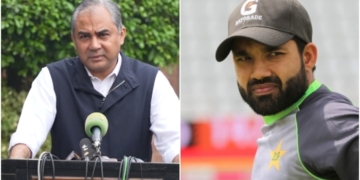



















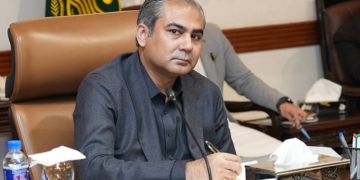












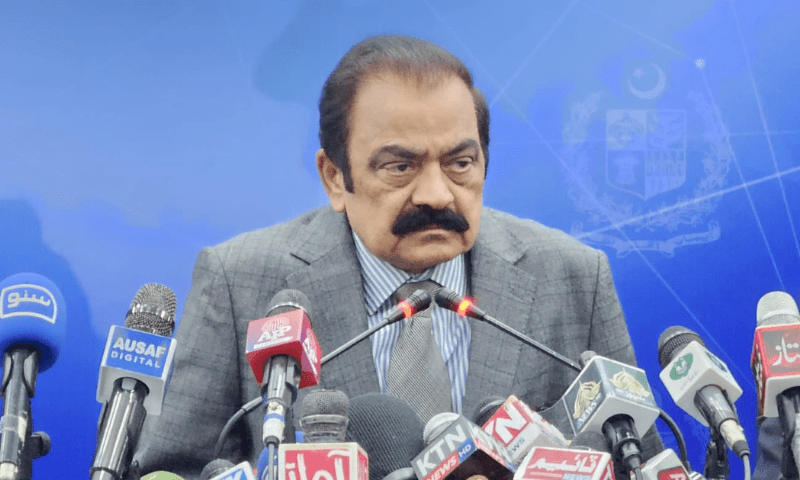
Federal Minister for Inter-Provincial Coordination and the prime minister’s political affairs adviser Rana Sanaullah has rebutted Interior Minister Mohsin Naqvi, saying he has no reason to hide his face and that proposals for new provinces should proceed through parliamentary consensus.
In a television interview, Sanaullah said his comments concerned Naqvi’s performance rather than his personality. As a fellow minister and political worker, he said he had a right to assess that performance and had consistently addressed Naqvi as interior minister rather than PCB chairman.
Responding to Naqvi’s warning about leaving a minister unable to show his face, Sanaullah said he had always faced matters openly and would not be silenced by threats. He urged Naqvi to respond with arguments.
Sanaullah maintained that unrelated remarks about the prime minister had complicated the new-provinces debate. He questioned what consultation had taken place over four months if President Asif Ali Zardari and Bilawal Bhutto Zardari were saying nobody had approached them. Since Naqvi had led the initiative, he should accept responsibility, Sanaullah argued.
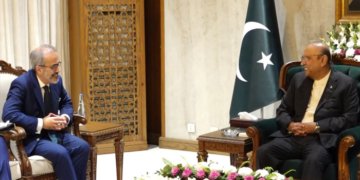
He said he had repeatedly heard Zardari describe Naqvi as a son and had seen him at the presidency during visits. Failing to bring even such close political circles on board represented a failure, he maintained.
Rejecting the suggestion that the system itself had failed, Sanaullah argued it had been made to fail through the actions of politicians and others. He described Shehbaz Sharif’s premiership positively and said shortcomings at their own level should be acknowledged.
On political funding, Sanaullah said millions of businesspeople served Pakistan and his criticism concerned a few individuals. He alleged some donors sought benefits later, while challenging anyone to prove those individuals had given the PML-N billions, millions or even Rs100.
He suggested parliamentary talks with the PPP could produce a way forward on a referendum if the party was assured that constitutional procedures would be followed and public opinion sought for guidance. He linked the PPP’s objections to concern that the issue could subsequently be taken to the constitutional court.
Sanaullah said he had identified parliament as the proper forum when Naqvi first raised the proposal on July 30. Earlier parliamentary consideration could have avoided controversy, he argued. He said the prime minister and PML-N would now play a full role, with consensus remaining their objective.