
































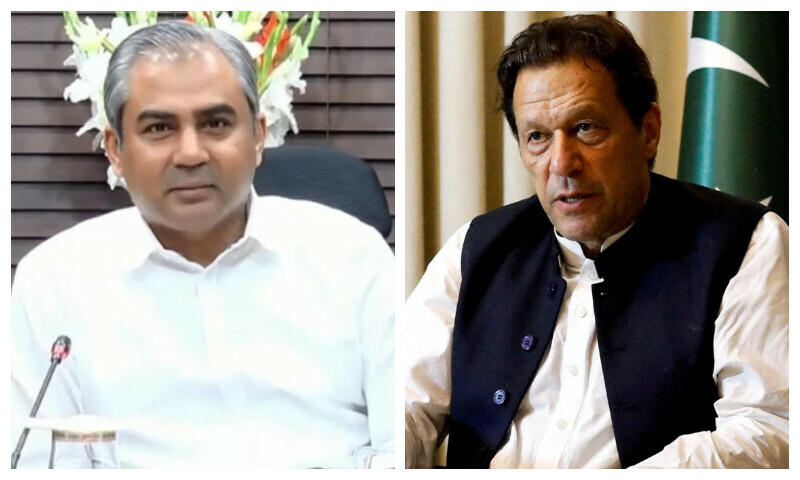
Islamabad: Quiet and behind-the-scenes efforts by Federal Interior Minister Mohsin Naqvi paved the way for contacts between the government and Pakistan Tehreek-e-Insaf regarding the implementation of the Supreme Court’s order for former Prime Minister Imran Khan’s eye examination. However, the process faced repeated delays and uncertainty due to the changing stance of Aleema Khan.
According to sources, Mohsin Naqvi, who is known for his proximity to the top military leadership, played a central role in bridging the communication gap between the two sides at a time when no formal contact existed. In this context, practical progress was made to ensure a mutually agreed medical examination of the PTI founder, who is currently incarcerated in Adiala Jail.
Under the agreed understanding, the government expressed its willingness to form an independent medical board comprising multiple doctors, while PTI was allowed to nominate an independent physician. PTI proposed the name of Dr. Nadeem Qureshi, which was accepted by the authorities. The government also granted PTI the option to nominate one family representative to oversee the process in order to maintain transparency.
Sources said that after consultation with Aleema Khan, PTI initially nominated Imran Khan’s nephew Qasim Zaman as the family representative, and the government agreed to this nomination. However, Aleema Khan later withdrew his name and conveyed that Dr. Nausherwan Burki should instead be included in that capacity.
Sources further stated that while these backchannel discussions were ongoing, Aleema Khan continued to share various posts on social media, adding complexity to the situation. Although PTI’s nominated independent doctor could be included in the medical board, it was not possible to include a family doctor as a representative. PTI was therefore asked to nominate a non-doctor family member for this role.
Frequent changes in nominations and positions led to delays and uncertainty, which reportedly surprised even some PTI leaders and members of the opposition alliance who were closely monitoring the process.
PTI also proposed that Imran Khan be shifted to Islamabad’s Shifa International Hospital for admission. The government responded that hospital admission would depend solely on the recommendation of the medical board and that the Supreme Court’s order did not include any prior directive for hospitalization. This position was conveyed to PTI Chairman Barrister Gohar Ali Khan and Khyber Pakhtunkhwa Chief Minister Suhail Afridi, with an emphasis on adopting a balanced and consistent strategy.
When no alternative arrangement was finalized by the opposition, the independent medical board, including PTI’s nominated doctor, visited Adiala Jail and conducted Imran Khan’s examination. PTI had been invited to send a representative, but no representative was present at the time of the examination.
Following the examination, PTI Chairman Barrister Gohar Ali Khan and Allama Raja Nasir Abbas were taken to meet the doctors and were briefed in detail about the findings.
The government also facilitated telephonic consultation between the examining doctors and Lahore-based physicians associated with PTI, Dr. Asim Yousaf and Dr. Khurram Mirza, to ensure a comprehensive review and satisfaction.
The board did not identify any serious eye condition. According to the report, Imran Khan’s vision was recorded as 6/6 in one eye and 6/9 in the other, and the medical board recommended the use of mild prescription glasses.