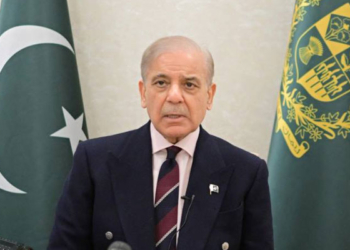







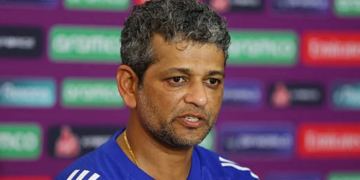














































Director General Inter-Services Public Relations (DG ISPR) Lt Gen Ahmed Sharif Chaudhry has said that if any party to the Makkah agreement comes under attack, the three member countries will jointly determine a course of action and respond accordingly.
Speaking in an interview with an Arab television channel, the DG ISPR said the mechanisms for implementing defence commitments are never disclosed publicly because information concerning military operations and security remains confidential.
He said the nature of any response to an attack would be determined by the three countries participating in the agreement, which would then act according to their jointly agreed course of action.
Lt Gen Chaudhry said there was no objection to the Makkah agreement, which he described as a defensive arrangement aimed at maintaining peace and stability in the region.
He noted that other defence agreements also exist in which countries provide assurances of mutual assistance.
The military spokesperson stressed that the Makkah agreement was based on mutual defence cooperation and contained no offensive element. He added that all participating countries continued to maintain their own independent relationships with other states.
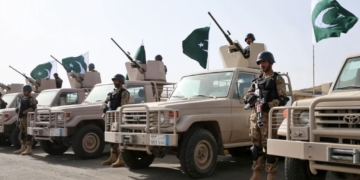
Responding to a question about India, the DG ISPR said New Delhi was spending significant resources to expand its military capabilities, while Pakistan’s capabilities were purely defensive in nature and did not mean the country was participating in an arms race.
He said Pakistan had no aggressive intentions towards any country and remained fully confident in its defensive capabilities, adding that it was capable not only of defending itself but also of responding to aggression.
Asked about political and military objectives, Lt Gen Chaudhry said political objectives were determined by the country’s political leadership and that the military and the state did not have separate goals.
He said Pakistan’s national objectives and aspirations fell within the domain of the political leadership.
On Afghanistan, the DG ISPR said United Nations reports had referred to the presence of dozens of terrorist organisations in the country, adding that Pakistan’s position was that Afghanistan should not become a hub for terrorism.
He alleged that the Taliban government was training militants for terrorist activities in Pakistan. He said Islamabad’s core demand remained that Afghan territory must not be used for terrorism against Pakistan.