























































Peshawar: Despite the failure of multiple peace agreements over the past two decades, Pakistan Tehreek-e-Insaf continues to support negotiations with the banned Tehreek-e-Taliban Pakistan, even though previous efforts failed to deliver lasting peace.
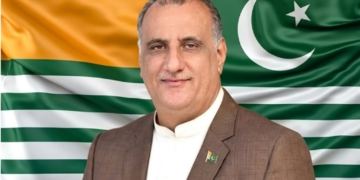
Addressing the provincial cabinet, Khyber Pakhtunkhwa Chief Minister Sohail Afridi stated that no military operation would be allowed in the province, emphasizing that armed actions are not a permanent or effective solution to any problem.
He said that peace cannot be achieved through decisions made behind closed doors and added that the peace jirga had also rejected any new military operation in the province.
According to the chief minister, although preparations for an operation are being discussed, no individual or institution can impose its decision on Khyber Pakhtunkhwa by force, as the will of the people must be respected.
Pakistan has previously signed several peace agreements with the TTP and allied militant groups, but none of these agreements succeeded in establishing sustainable peace. Following their collapse, the state was compelled to launch large-scale military operations in various regions.
In the past, Pakistani authorities signed peace deals with militant leaders, including Nek Muhammad, Baitullah Mehsud, Hafiz Gul Bahadur, Sufi Muhammad, Maulana Fazlullah, Faqir Muhammad, and Mangal Bagh, but these agreements did not last beyond a few months.
The first peace agreement was signed in April 2004 in the Shakai area of South Waziristan with Nek Muhammad Waziri, following a military operation that began in March 2004. The agreement aimed to pressure Nek Muhammad into severing ties with foreign fighters.
Under the agreement, the government released prisoners and compensated for property damage, while Nek Muhammad pledged to register foreign militants and halt cross-border attacks, commitments that ultimately failed to hold.