























































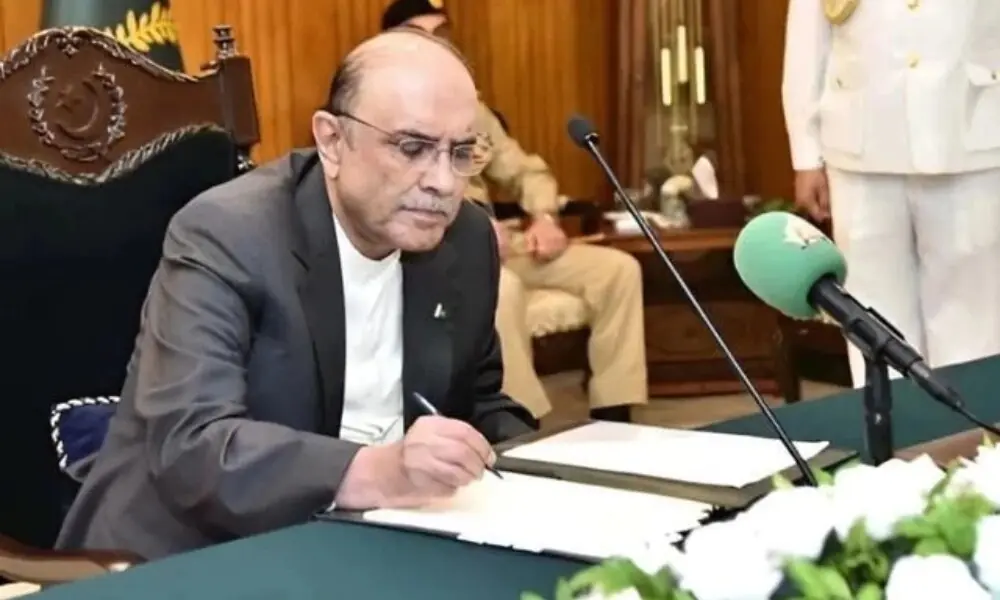
Islamabad: President Asif Ali Zardari on Sunday approved the National Institute of Health (Reorganization) Amendment Bill 2025, a landmark move that will establish Pakistan’s first National Cancer Registry. The registry is intended to help the country better understand the true burden of cancer and develop a comprehensive national strategy for its prevention and treatment.
According to the Presidency’s press wing, the bill is designed to reorganize the structure of the NIH, enhance its governance, and create a central database of cancer cases across the country. The registry will categorize confirmed cancer cases, fatalities, recoveries, pending hospital cases, and demographic details such as age, gender, and location. Importantly, patient data will remain confidential and cannot be shared without prior written consent.
The bill, passed by the National Assembly on August 12, 2025, emphasized the urgent need for a national cancer database to implement an effective action plan. It also called for raising awareness at the grassroots level, including villages and union councils, and working with public and private stakeholders to combat the rising tide of cancer.
Highlighting global trends, the bill noted that cancer cases are growing at an alarming rate worldwide. In Pakistan, the Global Cancer Observatory reported 178,388 cases in 2020, based on figures from the Punjab Cancer Registry. However, those numbers only reflected Lahore and parts of central Punjab, leaving most of the country’s population of 220 million underrepresented. Earlier efforts to establish a nationwide registry had failed due to a lack of resources.
Alongside the health reforms, President Zardari also signed the Anti-Dumping Duties (Amendment) Bill 2025. According to the Presidency’s media wing, the measure provides legal clarity regarding the imposition of anti-dumping duties on projects funded by Chinese grants. The duties will apply retroactively from July 1, 2020. The decision stems from an October 2022 review meeting on Gwadar projects, where the need for legal amendments was highlighted.
Officials described the approval of both bills as an important step towards strengthening healthcare reforms, improving institutional governance, and ensuring transparency in trade-related matters