























































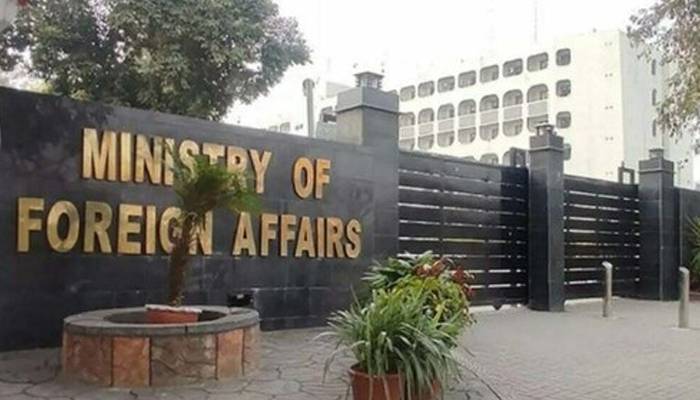
The Foreign Office has stated that during the talks, the Taliban delegation attempted to backtrack on its commitments and disrupted the atmosphere with unserious statements and accusations. According to a statement issued by the Foreign Office spokesperson, the third round of talks between Pakistan and Afghanistan concluded in Istanbul on November 7 under the auspices of brotherly countries Turkey and Qatar.
The statement praised Turkey and Qatar for their sincere and positive efforts to resolve differences between Pakistan and Afghanistan over the core issue of terrorism. It noted that over the past four years, since the Taliban came to power in Afghanistan, there has been a marked increase in terrorist attacks emanating from Afghan soil against Pakistan. Despite suffering heavy human and material losses during these years, Pakistan exercised extraordinary forbearance and refrained from retaliatory action.
The Foreign Office spokesperson said Pakistan had expected that, with time, the Taliban administration would rein in terrorist attacks originating from its territory and take practical measures against groups such as the TTP/Fitnah al-Hind and other elements. Unfortunately, instead of taking firm, verifiable steps, Pakistan received only assurances and unserious statements from the Afghan authorities.
The statement made clear that preventing Afghan territory from being used against Pakistan is a primary responsibility of the Taliban government, but it appears reluctant to take practical and verifiable measures and seeks to drown out the core issue by raising unrelated topics. Pakistan’s response in October 2025 reflects its determination not to spare any effort in protecting its territory and people.
The spokesperson added that the TTP/Fitnah al-Hind and BLA/Fitnah al-Ahrar are open enemies of Pakistan and its citizens, and anyone providing them shelter, assistance, or financial support is not a friend of Pakistan. He reiterated that Pakistan favors peace and diplomacy and considers the use of force a last resort; on that basis and following sincere proposals from Turkey and Qatar, Pakistan chose to participate in peace talks.
The statement recalled that during the first round in Doha, the parties had agreed on certain principled points and indicated willingness toward a temporary ceasefire, and that the second round in Istanbul was meant to discuss mechanisms for implementing those points. However, the Taliban delegation sought to retreat from their commitments and spoiled the environment with unserious remarks.
During the third round, Pakistan continued to maintain a positive and constructive stance and emphasized the need for an effective monitoring system to counter terrorism, but the Afghan delegation derailed the dialogue with unrelated allegations and claims, preventing meaningful progress. Throughout the talks, it became clear that the Taliban government seeks only to prolong a temporary ceasefire and is reluctant to take concrete, verifiable steps against the TTP/Fitnah al-Hind and BLA/Fitnah al-Ahrar.
The statement also said that the Taliban are attempting to present militants as displaced persons or refugees, while the issue at hand concerns support and sanctuary for terrorism rather than a humanitarian matter. Pakistan is willing to accept any Pakistani national back, provided they are formally handed over at the Torkham or Chaman border and not sent illegally along with weapons and equipment.
The Foreign Office declared that Pakistan will not negotiate with any terrorist group, whether TTP/Fitnah al-Hind or BLA/Fitnah al-Ahrar, and noted that there are elements within the Taliban who do not wish for confrontation with Pakistan, but an externally financed lobby is intent on spoiling relations.
The statement concluded that the people and armed forces of Pakistan are united against terrorism and that Pakistani citizens have borne the brunt of attacks originating from Afghan soil. Pakistan has repeatedly urged the Taliban government to cease support for anti-Pakistan militants; the notable rise in terrorism from Afghanistan since August 2021 cannot be denied, nor can the Taliban absolve themselves of responsibility. The Foreign Office also condemned attempts by the Taliban to promote Pashtun nationalism, stressing that Pashtun citizens are an active part of Pakistan’s state and society and play a prominent role in politics and national institutions.
Finally, the Foreign Office said Pakistan supports negotiations to resolve bilateral differences, but that the issue of terrorism must be addressed as the top priority, and that Pakistan’s armed forces and people are determined to uproot this menace together.