


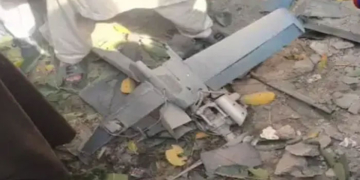

















































Following earlier confirmation from US sources, a senior French naval commander has also verified that Indian Rafale fighter jets failed to perform effectively against Pakistan’s air defence during the aerial confrontation that took place in May.
According to international news agencies, military observers around the world closely monitored the events of 6 and 7 May, considering it a rare real-time test of advanced fighter jets, trained pilots, and modern air-defence systems.
Captain Yook Lone, commander of a major naval airbase in north-western France, said during a media briefing that the issue did not lie in the Rafale aircraft itself, but in the skill, decision-making, and situational handling of the Indian pilots operating the jets. He added that the Pakistan Air Force managed the highly complex air environment that night with exceptional discipline, effective planning, and timely response.
Captain Lone, who has been flying Rafale jets for 25 years and oversees a base operating nuclear-capable Rafale squadrons, combat aircraft, submarines, and advanced aviation units, said that the scenario highlighted the difference between technology and operational capability. His remarks carry significant weight due to his extensive operational background and strategic experience.
Addressing a global forum at the Indo-Pacific Conference, he revealed that more than 140 fighter aircraft from both sides were airborne that night, making the situation extremely complicated. Yet Pakistan handled the engagement far better than India, he said. The French commander rejected the notion that Chinese technology had any role in India’s failure, clarifying that the setback was purely due to weak training and ineffective tactical decisions on the Indian side.
He emphasised that the Rafale’s radar and defence systems did not fail; rather, the operational shortcomings stemmed from the individuals operating the platform. He reaffirmed that the Rafale is fully capable of outperforming Chinese jets in any combat environment, but ultimate success depends on skilled pilots and strong military strategy.
During the session, an Indian representative attempted to interrupt, labelling the remarks as “Chinese propaganda,” but Captain Lone dismissed the objection and continued his analysis. He also disclosed that India is now showing interest in the naval version of the Rafale, capable of landing on aircraft carriers and carrying nuclear payloads—technology currently exclusive to the French Navy.
Defence experts note that this Pakistan-India aerial encounter has gained global significance because it provided rare real-world data on the performance of aircraft, pilots, and air-to-air missile systems, shaping future aerial warfare strategies worldwide.