






































































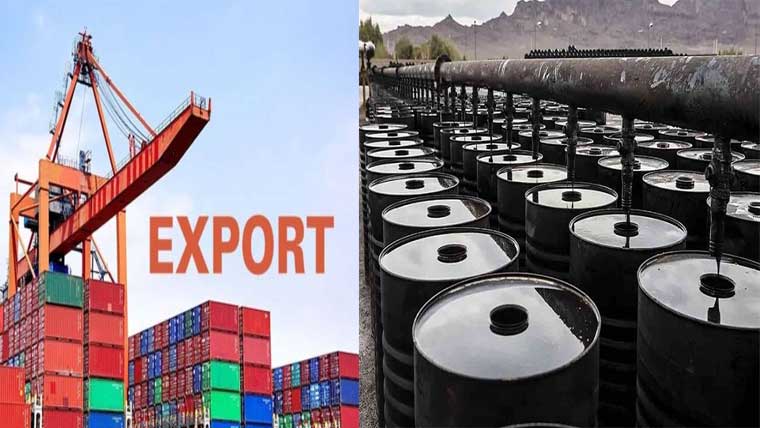
Pakistan’s fuel oil exports have climbed to a historic record level this year, and industry insiders believe the trend is likely to continue—or even accelerate—over the coming year. A report by Reuters cites industrial sources as saying that higher domestic taxes on fuel oil and a gradual shift by power producers toward cleaner energy sources have pushed refineries to export significantly larger volumes instead of selling into the local market.
Traders and energy analysts say Pakistan’s growing export volumes have become an important factor in the wider Asian fuel oil market. The increased outflows from Pakistan have added to regional supply, particularly in Asia, and this surplus has exerted downward pressure on fuel oil prices. According to them, in a market where availability was already ample, Pakistan’s record exports are reinforcing the oversupplied environment.
Fresh data compiled by Kpler and LSEG shows that Pakistan’s fuel oil exports have reached a new all-time high this year. The country has exported more than 1.4 million tonnes of fuel oil so far—equivalent to roughly 8.9 million barrels—which represents a 16 percent increase compared to 2024. Most of these volumes have been shipped to Southeast Asian countries and the Middle East, where marine fuel and industrial demand support such imports.
LSEG’s figures further indicate that, in 2025 alone, Pakistan has already exported around 1.33 million tonnes, up from 1.11 million tonnes during the same period last year. This significant jump underlines how refineries are increasingly turning to export markets as their primary outlet for surplus fuel oil, rather than relying on shrinking domestic demand.
Industry sources note that the bulk of these exports comprise High Sulphur Fuel Oil (HSFO), which is predominantly used as bunker fuel for ships, while only a relatively small portion is utilized by refineries as feedstock. This means that Pakistan’s fuel oil export profile is closely tied to the global marine fuel segment, where pricing and demand are highly sensitive to shifts in supply.
According to Valerie Panoupie, Vice President at Rystad Energy, Pakistan mainly ships HSFO to various Asian countries, where post-summer fuel oil supply is already strong. As a result, the additional barrels arriving from Pakistan have helped push prices further down in an already well-supplied market. She emphasized that this extra supply is one of several elements contributing to softer fuel oil pricing in the region.
Sources also point out that Pakistani refineries opted to sell more fuel oil via international tenders this year after the government raised taxes on domestic fuel oil usage. At the same time, power producers have been moving away from fuel oil as a primary fuel and increasingly favoring alternatives such as coal and solar power. This structural shift in the power sector has reduced the attractiveness of fuel oil in the local market and encouraged refiners to rely more heavily on exports.
Traders say that Pak Arab Refinery (PARCO) has emerged as the largest exporter among Pakistani refiners, while Cnergyico, Attock Refinery, National Refinery and Pakistan Refinery have also been active exporters. Collectively, these companies have lifted multiple cargoes, contributing to Pakistan’s record export volumes.
Cnergyico, Pakistan’s largest refinery, has signaled its intention to further increase exports in the coming period. The company’s Vice Chairman, Usama Qureshi, stated that Cnergyico exported approximately 247,000 tonnes of fuel oil during FY 2024–25. He added that the company expects its exports to rise by at least 50 percent, as it has shifted to processing lighter and lower-sulphur crude grades, which yield higher quantities of cleaner, low-sulphur fuel oil.
Qureshi further disclosed that Cnergyico has entered into a partnership with global trading giant Vitol, aimed at ramping up exports of low-sulphur marine fuel from Pakistani ports. This collaboration is expected to enhance Pakistan’s presence in the international bunker fuel market and improve the commercial viability of exporting such products.
Syed Nazir Abbas Zaidi, Secretary General of the Oil Companies Advisory Council (OCAC), forecast that this export momentum is likely to continue into 2026. He noted that fuel oil is no longer economically attractive for power generation, and—following the last federal budget—it is also not profitable to sell in the domestic market, which leaves exports as the most viable route for refineries dealing with surplus fuel oil.