







































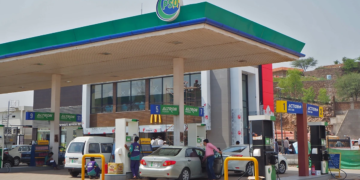





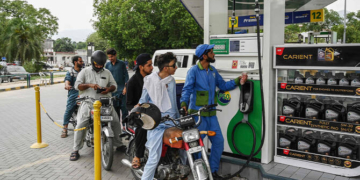










The Economic Coordination Committee (ECC) of the federal cabinet is scheduled to meet today, in what is being viewed as a key sitting for Pakistan’s petroleum pricing framework. Following the meeting, there is a strong likelihood that a small increase in the prices of petroleum products—particularly petrol—will be passed on to consumers.
According to a report carried by a leading English financial daily, the ECC agenda includes a proposal to revise upward the profit margins of overseas marketing companies and petroleum dealers. The suggested increase is to be calculated on the basis of the national Consumer Price Index (CPI) inflation for fiscal years 2023–24 and 2024–25, with a minimum adjustment of 5 percent and a maximum ceiling of 15 percent, to link margins more systematically with inflation.
Under the proposed formula, the per-litre margin of Oil Marketing Companies (OMCs) is expected to rise by Rs 1.63, while dealers’ margins may be increased by Rs 1.79 per litre. If approved, these enhanced margins will be built into the final consumer price of petrol and other products, resulting in what officials are describing as a “modest” but noticeable increase for end-users.
The Petroleum Division had earlier submitted a detailed summary to the ECC regarding the revision of OMC and dealer margins. During the ECC meeting held on 6 September 2025, it was decided in principle that, going forward, profit margins would be determined under a structured mechanism to be developed and implemented by the Oil and Gas Regulatory Authority (OGRA). This mechanism would take into account the operating cost structure of Pakistan State Oil (PSO), ensuring that margins are cost-based rather than arbitrarily fixed.
Following this decision, OGRA conducted its assessment for the fiscal year 2024–25 and recommended an increase of Rs 1.35 per litre in OMC margins and Rs 1.40 per litre for dealers. These figures were worked out on the basis of financial data, operating expenditure, and logistics costs provided by PSO, reflecting what the regulator considered to be a rational and justifiable adjustment.
Subsequently, on 10 May 2025, the Petroleum Division submitted a fresh summary to the ECC, revising its earlier position and recommending a lower increase—Rs 1.13 per litre for OMCs and Rs 1.12 per litre for dealers. According to sources, this revised proposal seeks to balance inflationary pressures, fiscal constraints, and the need to avoid placing an excessive burden on consumers.
All of these proposed figures and the underlying formula are now expected to come up for final consideration at today’s ECC meeting. If the recommendations are endorsed, the revised margins will be incorporated into the pricing structure of petroleum products, and the resulting incremental cost will likely be passed on to consumers in the form of a slight increase in petrol prices in the near term.