





























































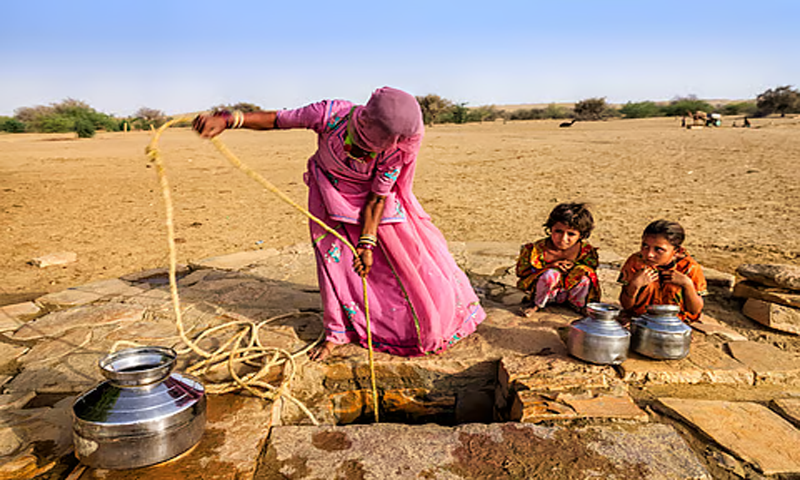
The Asian Development Bank has revealed in its latest Water Development Outlook report that over 80% of Pakistan’s population does not have access to safe drinking water, placing the country in the grip of a rapidly escalating water security emergency. The report states that Pakistan will require an estimated USD 35 to 42 billion over the next 10 years to improve overall water governance, regulatory measures, and infrastructure.
According to ADB, per capita water availability has reduced significantly due to population growth, falling from 2,400 cubic meters to almost 1,100 cubic meters. The shortage of clean drinking water is contributing to the spread of waterborne diseases and posing serious public health risks.
Between 1972 and 2030, Pakistan’s available water per person dropped from 3,500 cubic meters to historically low levels. The report further highlights that excessive use of water in agriculture is reducing groundwater levels, increasing contamination, and placing additional pressure on irrigation systems. Weak policies, insufficient regulation, and persistent under-investment have limited Pakistan’s ability to provide clean water to its rapidly growing population.
The report points out that rural water supply remains inadequate, while urban centers face challenges such as water contamination, unregulated wastewater discharge, and urban flooding. Annual water demand in major cities is rising by nearly 10%, yet water treatment capacity remains insufficient.
ADB warns that Pakistan’s limited storage capacity, aging water infrastructure, minimal private investment, and weak billing and tariff systems are aggravating the crisis. Without major institutional coordination, technical upgrades, financial planning, and large-scale projects, water security is likely to deteriorate further.
According to the report, Pakistan may need around PKR 12 trillion—based on the current exchange rate—to strengthen water infrastructure and storage. Although the country has made progress in policy frameworks and water governance over the past 13 years, these efforts have not translated into lasting water security improvements, leaving Pakistan highly vulnerable to future shortages.