




































































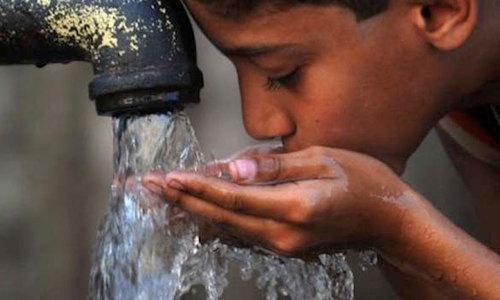
In the research of Karachi University published in the international journal, it has been revealed that the water supplied in Liaquatabad town of Karachi is contaminated with highly polluted metal particles and waste.
According to the report, this research has been published in the International Journal of Environmental Quality under the title ‘Evaluation of water quality supplied to Liaquatabad town through water quality index and geographical analysis’.
The research was led by Assistant Professor Dr. Aamir Alamgir and his team Dr. Noor Fatima, Shah Noor Khan, Aliza Naseer, Aliza Khan, Muhammad Nauman Siddiqui, and Faheem Jafari at the Department of Environmental Studies (IES), Karachi University.
The team collected 23 samples of water supplied through the pipeline from Liaquatabad town in 2022 and evaluated their characteristics and quality of transparency.
The researchers declared 95.6 percent of the drinking water samples unsafe due to metal contamination, while about 74 percent of the samples were found to contain E. coli, and more than 70 percent of the samples were found to be contaminated with sewage.
According to the study, only ‘two samples were excessively turbid, while the remaining samples were slightly turbid, providing suitable conditions for the growth of various pathogenic bacteria and parasites. High levels are harmful to public health and can cause kidney stones and heart disease.
The team also revealed high levels of iron, nickel, and iron in the samples, besides, high levels of arsenic were found in 78.27 percent of the samples.
The effects of excess metal consumption on human health have been studied extensively and are harmful, even at low levels, from prolonged consumption of arsenic-contaminated water, the study said. Diabetes, heart, lung, and cancer diseases can occur.
Dr Alamgir told Dawn that ‘major causes of water pollution include poor distribution systems, leaking or broken lines and meeting of drinking water lines with sewage lines.
He explained that the presence of certain metals such as sulphate indicates that the water supplied to households is being contaminated by industrial waste at some point.
He said that poor water quality is responsible for 40% of all deaths and 30% of all diseases in Pakistan. The most common cause of death among children is diarrhea. Suffering from diseases caused by contaminated water.
The team had previously conducted a detailed analysis of the city’s water supply followed by a study of high-risk areas and found similar results.