





































































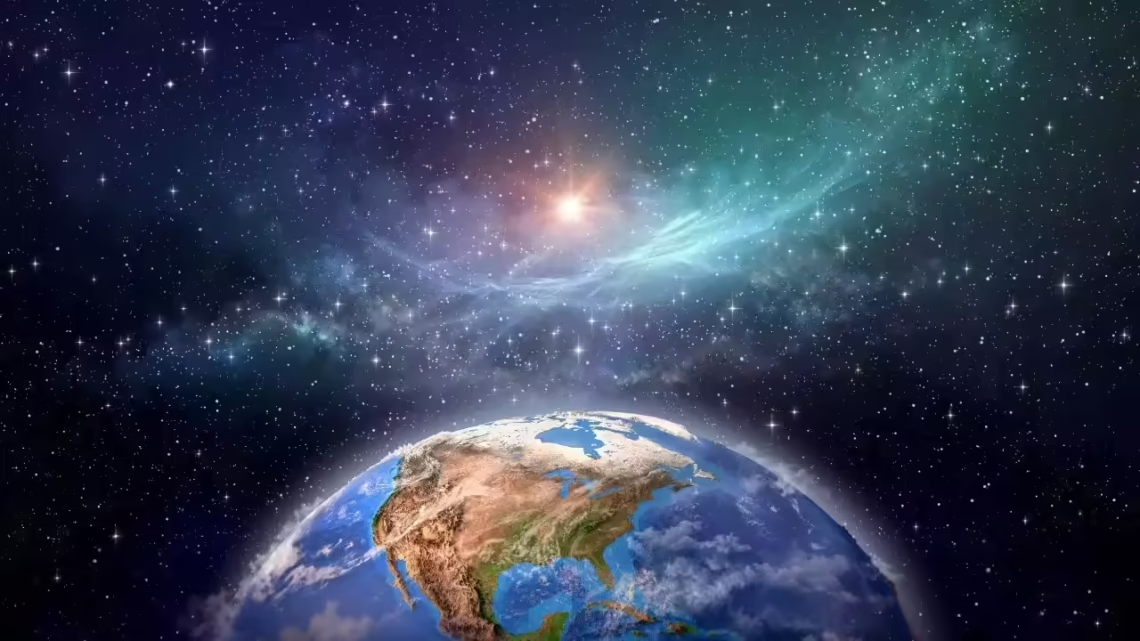
According to scientific assessments associated with NASA, the end of Earth is not expected to come from a sudden event such as an asteroid impact, but rather from gradual environmental changes that could make the planet uninhabitable for life in about one billion years.
Reports indicate that the primary risk lies in the gradual transformation of Earth’s atmosphere into a state that is no longer suitable for living organisms, and this condition could arise long before the planet itself is destroyed.
According to a scientific journal, the main reason behind this process is the natural evolution of the Sun, which continues to grow hotter over time and significantly impacts Earth’s environment.
Scientists explain that as the Sun’s heat increases, Earth’s temperature will continue to rise, leading to more water vapor in the atmosphere, which in turn traps additional heat and accelerates the warming process.
This creates a dangerous cycle known as the runaway greenhouse effect, which could eventually heat the planet to a level where sustaining life would no longer be possible.