


















































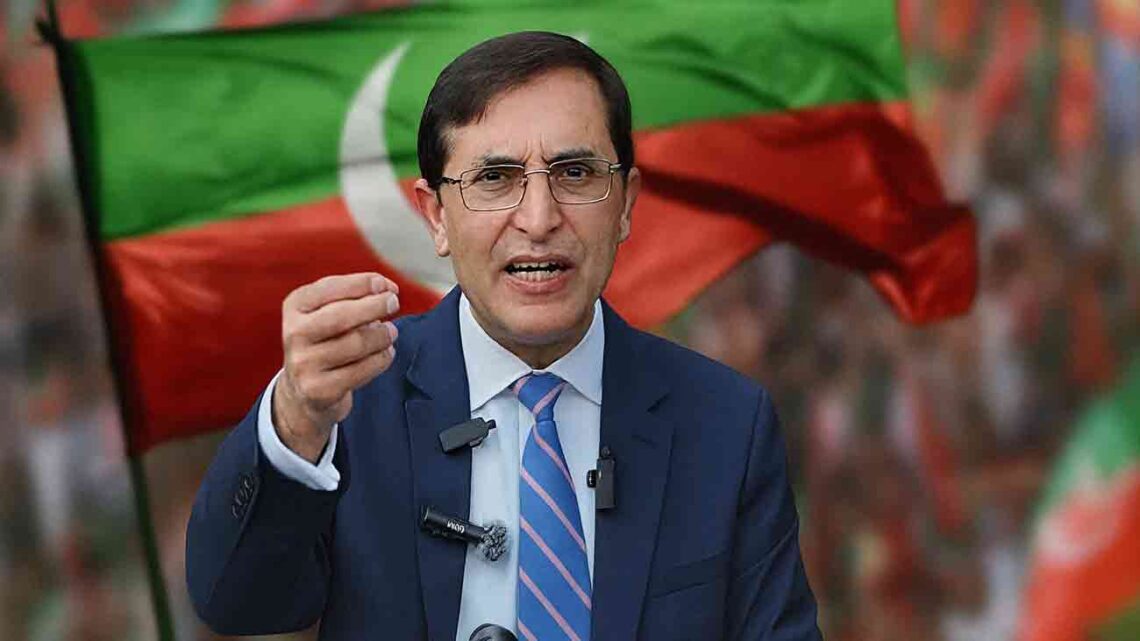
With the Election Commission of Pakistan (ECP) refusing to recognize Barrister Gohar Ali Khan as the chairman of Pakistan Tehreek-e-Insaf, political and parliamentary circles now widely view PTI as a party that has been pushed to the margins of both national politics and the legislature.
Previously, the party had already been deprived of its registration, effectively excluding it from the formal electoral process. Although the government was not actively moving toward declaring PTI a banned organisation solely based on its unregistered status, the ECP’s reluctance to formally acknowledge its organisational structure and leadership had long been a key factor complicating any attempt to impose a complete legal ban. The latest stance of the ECP has further deepened this institutional and political uncertainty for PTI, whose legitimacy and operational space were already under severe pressure.
Highly reliable political and parliamentary sources indicate that the association of several senators, elected as independents but politically aligned with the PTI, has been effectively disregarded in the Senate’s working framework. As a result, PTI is now seen as one of the smallest and weakest parliamentary groupings in the upper house, with minimal numerical strength and limited influence in legislative affairs.
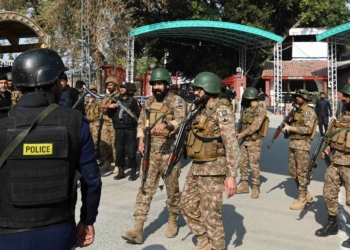
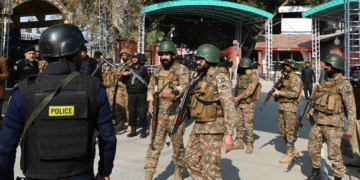
In parallel with these political developments, security around Adiala Jail has been tightened to an extraordinary degree in view of the presence of PTI’s founding leader in the facility. According to sources, a sizeable number of police personnel have been deployed in and around the prison from Monday, with the provision to increase their strength further if required. In line with their security strategy, authorities have chosen not to disclose the exact number of personnel stationed in the area.
It has also been learned that Rangers contingents have been placed on immediate standby to assist the police whenever needed. A permanent, three-layer security cordon has been established around the jail, ensuring that no unauthorised person can move beyond the first checkpoint. Only those individuals whose names appear on a pre-approved list supplied to the jail administration will be allowed to proceed further into the secure zone.
Internal jail sources say that the PTI founder continues to receive the facilities already available to him inside the prison. However, his request to summon a team of doctors from a private hospital in Lahore for his personal medical examination is unlikely to be accepted. The jail administration has informed all inmates that if they require medical attention, they may be examined three times a day by designated jail doctors. Additionally, when necessary, specialist doctors from Islamabad and Rawalpindi can also be consulted. This, however, is strictly conditional upon a written medical recommendation issued by the jail’s own medical officer.
Taken together, these measures indicate an environment of heightened security around Adiala Jail at the same time that PTI’s institutional and parliamentary standing has been severely weakened. The ECP’s latest decision has further constrained the party’s legal identity and organisational continuity, leaving it under intense political and structural pressure.