




















































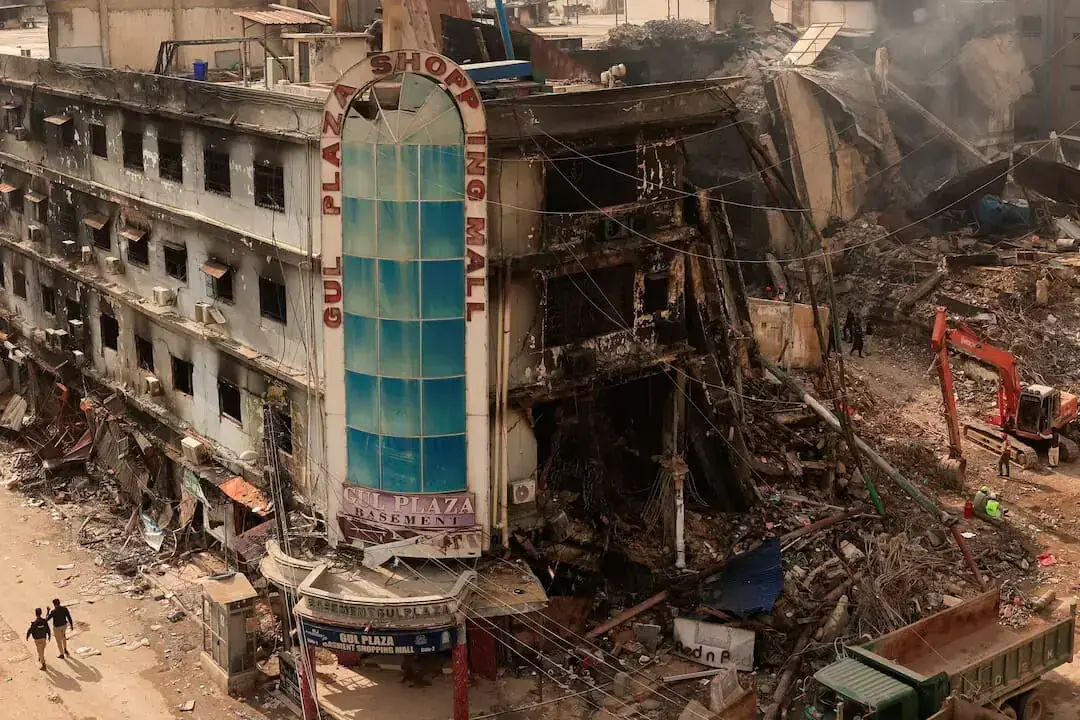
Tanveer Pasta, President of the Gul Plaza Association, has blamed the slow response of rescue services for the deaths that occurred during the Gul Plaza tragedy.
He submitted a written response to the Gul Plaza judicial commission’s questionnaire, stating that delayed emergency response significantly contributed to the loss of lives.
According to his statement, the first fire brigade vehicle reached the site at 10:55 AM, but the fire tender ran out of water within about 20 minutes. Two additional fire tenders arrived around 11:30 AM, by which time the fire had already spread across the ground floor from three directions.
Tanveer Pasta further stated that rescue personnel lacked proper equipment, masks, and safety gear. He also noted that firefighters did not have foam or chemical agents required to control the blaze, which slowed down the initial firefighting efforts.
He added that the market administration arranged private water tankers on a self-help basis to support firefighting efforts.
According to his statement, rescue operations became more active after dawn, but by then the fire had intensified. Some trapped individuals were rescued after sharing their locations, but the absence of proper rescue facilities made it impossible to save many others in time.
He emphasized that more lives could have been saved if rescue teams had adequate equipment and resources.
Tanveer Pasta also stated that due to a power outage, formal announcements inside the building were not possible. Instead, shopkeepers and management shouted warnings to guide people toward the exits.
He said that approximately 3,500 people were present inside Gul Plaza at the time of the incident, and most of them were successfully evacuated. According to him, all 16 exits of the plaza were open and thousands of people managed to escape through them.
During inspection, one shutter on the second floor was found closed but not locked. It was likely shut due to damage to the spring mechanism caused by the intense heat.
He also revealed that the plaza housed flammable items such as artificial flowers, toys, garments, sprays, and other combustible materials. Seven diesel generators were installed on the building’s rooftop, five of which were operational.
Out of the 72 people who died in the incident, 51 were associated with the market.
Meanwhile, sources from the judicial commission stated that the association president did not provide title documents for the shops. Details regarding the legal status of the shops, the legality of maintenance collection, and the association’s bylaws were also not submitted.