




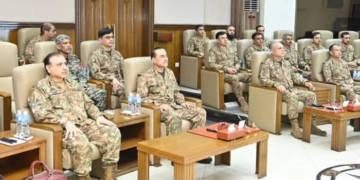























































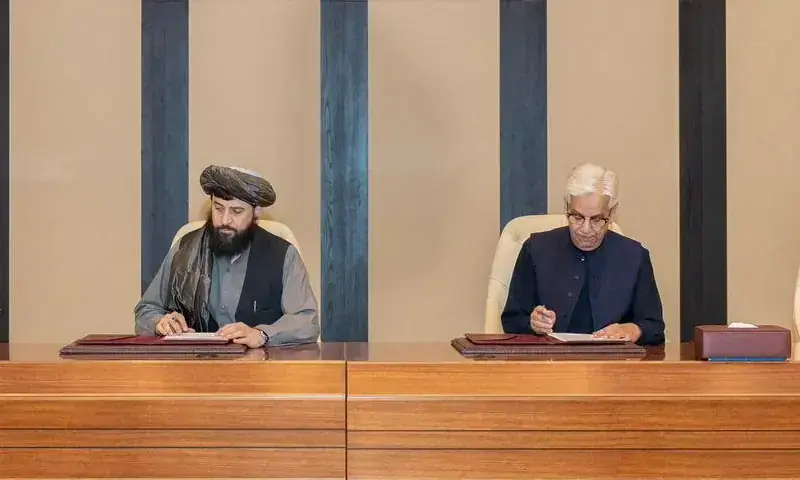
During the second round of talks in Istanbul, the Pakistani delegation presented its firm and final stance to the Taliban, making it clear that Pakistan would not accept any support for terrorist elements.
According to security sources, Pakistan categorically stated that decisive and concrete action must be taken to dismantle Tehrik-e-Taliban Pakistan (TTP). Officials said the arguments presented by the Taliban were illogical and disconnected from ground realities, indicating that the group appeared to be pursuing a separate agenda that is not in the interest of Afghanistan, Pakistan, or regional stability. They added that further progress in the talks would depend on the Taliban’s constructive behavior.
The second round of talks between Pakistan and Afghanistan began at 2:30 p.m. on October 25 at a local hotel in Istanbul and continued for more than nine hours. The process resumed today, with both sides submitting counterproposals in the presence of mediators.
Diplomatic sources revealed that the Taliban had offered to relocate TTP fighters away from the Pakistani border. Pakistan, however, rejected the proposal and urged the Taliban to honor their international commitments by taking decisive action against the group.
The talks followed intense clashes along the 2,600-kilometer border between Pakistan and Afghanistan. The first round, mediated by Qatar and Turkey, was held in Doha on October 18 and 19, where both sides agreed on an immediate ceasefire. The two countries also expressed their willingness to hold follow-up meetings to ensure the continuity and credible monitoring of the truce.
A statement from Pakistan’s Foreign Office confirmed that the second round of negotiations was underway in Istanbul. The statement emphasized that Pakistan does not seek escalation but demands that the Afghan Taliban fulfill their commitments to the international community and take strict action against TTP, Fitna al-Hindustan, and other terrorist organizations.
In a separate interview, Defense Minister Khawaja Muhammad Asif stated that the agreement signed between Pakistan, Afghanistan, Turkey, and Qatar clearly stipulates that there will be no cross-border aggression. As long as this agreement is respected, the ceasefire will remain in effect.
He accused the TTP of carrying out attacks on Pakistan with the support of the Afghan Taliban, although the Taliban administration denied the allegations. The defense minister added that the core purpose of the ceasefire agreement is to eliminate the threat of terrorism, which has plagued border regions for years.
The current tension began when Pakistan demanded that Kabul curb militants allegedly launching attacks from safe havens inside Afghanistan. Following unprovoked firing by Afghan forces on the night of October 11 and 12, the Pakistan Air Force carried out retaliatory strikes, targeting several Afghan posts and TTP positions.
The Taliban government then requested an immediate ceasefire, after which Pakistan announced a temporary truce on October 15 and agreed to maintain it throughout the negotiations.