




































































Heavy Rains and River Flooding in Punjab
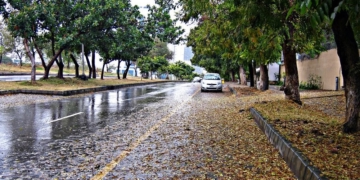
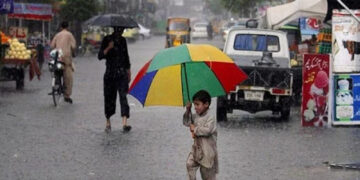
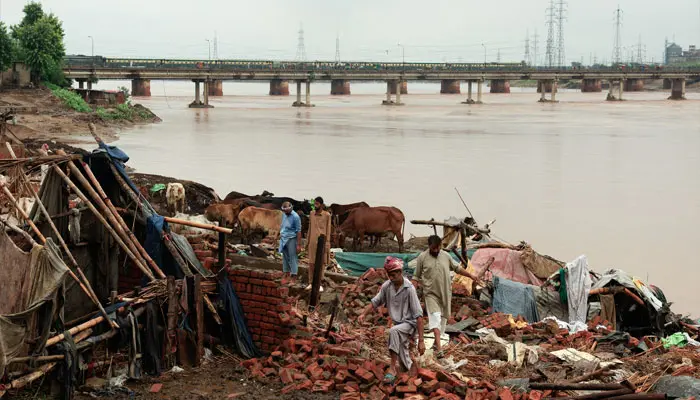
Punjab is facing one of the worst flood situations in recent years, as torrential rains and overflowing rivers have submerged thousands of villages and displaced millions of people. The Sutlej, Ravi, and Chenab rivers have risen beyond their limits, inundating vast areas.
Indian authorities issued warnings of rising water levels at Ganda Singh Wala and Ferozepur, prompting renewed evacuations along the Sutlej River. While slight receding was observed in some places, the overall threat remains severe, with rescue and relief operations underway across multiple districts.
Situation of Rivers and Barrages
At Panjnad Headworks on the Chenab River, water discharge surged beyond 668,000 cusecs, forcing mass evacuations in Alipur tehsil. Between Wednesday morning and Thursday morning, the flow rose by an additional 100,000 cusecs.
Late at night, a protective embankment near Shujaabad broke again, flooding nearby settlements. Downstream pressure has also reached Sindh, where the Guddu and Sukkur barrages continue to record flows above 400,000 cusecs, maintaining a medium flood level.
In Rahim Yar Khan, officials reported that 660,000 cusecs of water were passing through Chachran Sharif, though no immediate threat existed for local populations. According to the Flood Forecasting Division, Panjnad recorded flows above 668,000 cusecs, while Guddu and Sukkur barrages exceeded 400,000 cusecs.
The PDMA’s River Flow Report confirmed that Marala Headworks on the Chenab held steady at 68,986 cusecs, Khanki Headworks rose to 82,411 cusecs, and Qadirabad Headworks remained stable at 84,440 cusecs.
The Ravi River flows were stable overall: 19,500 cusecs at Jassar, 32,120 cusecs at Ravi Siphon, 31,682 cusecs at Shahdara, 59,580 cusecs at Balloki Headworks, and 75,549 cusecs at Sidhnai Headworks.
Tragedies and Displacement
In Bahawalnagar, a Rescue 1122 boat carrying 23 people capsized, leaving two dead. Another boat overturned in Jalalpur Pirwala with 25 passengers; five, including children, went missing. In Muzaffargarh, three young boys were swept away by floodwaters—one died, while two survived.
Authorities reported that in Muzaffargarh’s Seetpur, Khairpur, and Bait Nabi Shah areas, as well as Jalalpur Pirwala, around 706,000 people were affected across 148 villages. In Khanewal, nearly 159,000 people were evacuated, while 128,658 acres of crops were destroyed by floodwaters.
Punjab Relief Commissioner Nabeel Javed stated that more than 4,500 villages and 4.28 million people across the province have been affected. Of these, 2.26 million people have been relocated to safe areas, while 79 fatalities have been confirmed so far.
Rescue and Relief Operations
Punjab Emergency Service Secretary Dr. Rizwan Naseer reported that in Multan alone, over 13,600 people were rescued within three days, with 25,000 shifted to safer locations. Province-wide, more than 362,000 individuals were evacuated using 139 rescue boats.
PDMA Director General Irfan Ali Kathia said relief distribution is ongoing in Jalalpur Pirwala, supported by four helicopters, 2,000 tents, and military assistance.
Rahim Yar Khan Deputy Commissioner Khurram Parvez confirmed that as water levels rose downstream of Panjnad, evacuation operations were launched in Khanpur and Liaqatpur. Nearly 12,000 people were moved, six relief camps were set up, and 1,800 tents were distributed among affected families.
Rains in Balochistan
NDMA Chairman Lt. Gen. Inam Haider Malik said Pakistan is experiencing the final phase of this year’s monsoon season. Heavy rains over the past two days triggered flash flood threats across several areas of Balochistan, with PDMA issuing alerts to local administrations.
At Hub Dam, water levels rose to 338 feet—just one foot below maximum capacity. Officials warned that spillways may be opened anytime, advising nearby residents to move to safer ground.
The Balochistan government, in coordination with Sindh, has reinforced embankments along the left bank of the Indus River to handle incoming floodwaters from Punjab’s rivers. Rescue teams, boats, and heavy machinery have been deployed in Nasirabad division, covering Usta Muhammad, Sohbatpur, and Jaffarabad.
Provincial Irrigation Minister Sadiq Umrani informed the assembly that preparations are complete to relocate vulnerable communities. It was agreed with Sindh authorities that no embankments will be deliberately breached; if the Indus flows cross 1.1 million cusecs, both provincial chief ministers will jointly decide further action.
Balochistan PDMA DG Jehanzaib Khan confirmed that 16 flood control centers have been established in Nasirabad’s four districts, operating round the clock to provide rescue and relief to displaced families.