



































































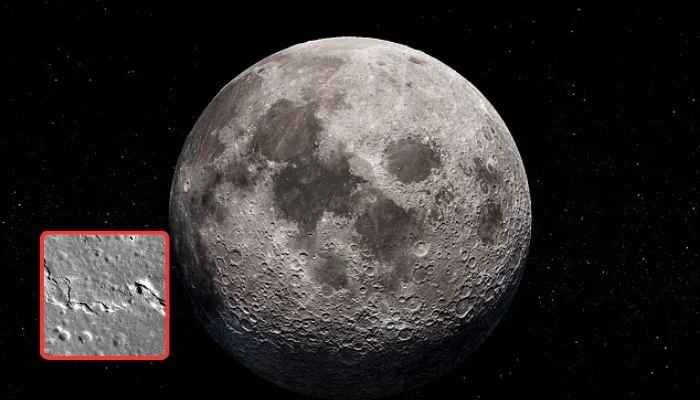
Scientists at the Center for Earth and Planetary Studies of the National Air and Space Museum have revealed that the Moon is gradually shrinking and undergoing noticeable changes in its surface structure, raising important considerations for future space missions.
A new scientific study has identified more than 1,000 newly discovered cracks on the Moon’s surface, increasing concerns regarding the safety of upcoming lunar missions. Experts suggest that these cracks reflect surface movements and internal structural changes within the Moon.
The research, published in The Planetary Science Journal, states that these newly observed structural features could expose future lunar exploration missions to the risk of significant moonquakes, underscoring the need for careful planning and precautionary measures.
The study’s lead author, Cole Nippier, stated that upcoming missions will be crucial in collecting vital data about the Moon’s tectonic and seismic activity, which will help scientists better understand its internal structure and geological dynamics.
He further explained that the collected data would directly contribute to mission safety and scientific success, adding that the current phase of lunar science and exploration marks an especially exciting and significant period.
Although scientists have been aware since 2010 that the Moon is shrinking, the discovery of these new cracks, known as Small Mare Ridges (SMRs), is being regarded as a major advancement in lunar research.
Experts believe that this discovery will enhance understanding of the Moon’s crust, internal composition, and thermal history, potentially shaping the direction of future space exploration efforts.