















































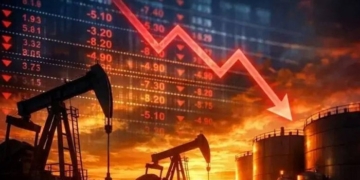
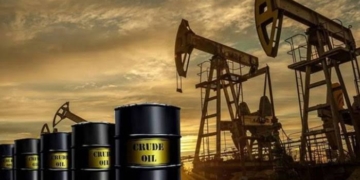










The closure of the Strait of Hormuz has triggered major turbulence in the global oil market, raising concerns that prices could surge to $200 per barrel, posing serious risks to the global economy.
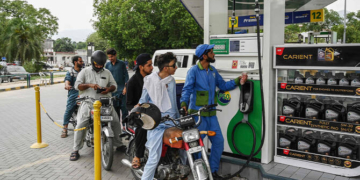
This major oil supply crisis has now been ongoing for one month, leading to rising global prices, downgraded growth forecasts, and emerging fuel shortages across Asian countries, including Thailand and Pakistan.
According to Bloomberg, the world has yet to fully grasp the severity of the situation, while U.S. officials and Wall Street analysts are considering the possibility that oil prices could reach an unprecedented $200 per barrel, which could severely impact the global economy.
Experts have compared the situation to the oil crisis of the 1970s, warning that the closure of the Strait of Hormuz could trigger a major global crisis. Fuel shortages in Asia may spread to Western countries, and Europe could face diesel shortages in the coming weeks.
Data shows that the disruption has reduced global oil supply by approximately 11.1 million barrels per day. In comparison, Saudi Arabia and the UAE have attempted to offset 10.9 million barrels per day through alternative routes.
The average global oil supply in January and February 2026 stood at 106.9 million barrels per day, but current disruptions have led to a shortfall of 18.4 million barrels per day, increasing pressure on markets.
Saudi Arabia has supplied 7.3 million barrels per day through alternative routes, while the International Energy Agency released 2 million barrels per day from reserves, and other measures helped bridge a gap of 3.7 million barrels per day.
TotalEnergies CEO Patrick Pouyanné warned that if the crisis continues for more than three to four months, it could become a major global issue, as around 20 percent of global crude oil and LNG production capacity may be affected.
The daily supply gap of 11 million barrels from the Strait of Hormuz exceeds the combined oil consumption of the UK, France, Germany, Spain, and Italy, although reduced demand in Asia is partially offsetting the shortfall.
The United States and other countries have announced record releases of oil reserves to stabilize prices, while Iran has allowed some foreign vessels to pass through the Strait of Hormuz, though these measures have limited impact.
Saudi Arabia and the UAE have begun transporting oil through alternative pipeline routes, with Saudi Arabia shifting 60 percent of its oil from the Gulf to the Yanbu export terminals.
Currently, global oil prices stand at around $112 per barrel, which is 55 percent higher than at the start of the conflict, though still below the 2008 record of $147.50 per barrel.
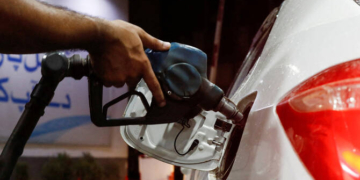
European natural gas prices have risen by 70 percent, although they have not yet reached the levels seen during the 2022 crisis. Meanwhile, demand in Asia has declined by around 2 million barrels per day, particularly in the petrochemical sector, and shortages of petrol, diesel, and jet fuel are increasing.
In Pakistan, cricket fans have been advised to watch matches at home to conserve fuel, while Europe may face diesel shortages in the coming weeks.


